Interview: Green ammonia priced at $400pt fob achievable in 15 years, says InterContinental Energy CEO
July 13th, 2026 by Richard Ewing / Head of Ammonia / Deputy Editor at Profercy Nitrogen


July 13th, 2026 by Richard Ewing / Head of Ammonia / Deputy Editor at Profercy Nitrogen
The flood of low-carbon (blue) and zero-carbon (green) ammonia production projects has slowed to a trickle in recent years as the regulatory obstacles and cost challenges become ever more apparent to investors seeking to tap into the clean ammonia wave.
Despite plenty of projects not materialising, new and existing ammonia market players continue to push ahead with major new plants, either through carbon-capture systems or state-of-the-art technologies based on renewable energies.
One such participant is InterContinental Energy (ICE). The Singapore-headquartered group aims to utilise wind and solar resources to accelerate the energy transition through large-scale production of green fuels via billion-dollar projects with established partners.
Showcase green hydrogen/ammonia projects are earmarked for Oman, home to joint venture Green Energy Oman (GEO), and Australia, which will host the wholly owned Australian Renewable Energy Hub (AREH) and the jointly owned Western Green Energy Hub (WGEH).
The Oman-focused consortium aims to deliver a 1.8m. tonne/year green hydrogen project that will likely involve significant green ammonia output for international markets, while the vast AREH project aims to manufacture 9m. tonnes/year of zero-carbon ammonia at full scale.
Speaking on the sidelines of the recent IFA annual conference in Monaco, ICE CEO Alex Tancock outlined his vision for the three projects, why recent geopolitical turmoil has bolstered their portfolio, and how Europe is the target market for Omani tonnes priced at $400pt fob.
“When we set up the business 12 years ago, our view was with wind and solar prices dropping, it would become feasible to develop large projects based on those renewable resources. We looked at the whole world and ended up with our three current projects,” he explains.
“We sought out countries with high quality resources and good jurisdictions; places where we could have a large degree of confidence the government would allow us to do what we wanted with our money.
“By design, we have made our projects standalone in places where we don’t have to worry about political interference. Our strategy has always been one of large projects in great jurisdictions with the best off-grid resources where you can build in phases.
“That was the bet we made a decade ago and, so far, it’s paying off as lots of our competitors are falling by the wayside, either because [of factors like] the jurisdiction was wrong or the grid reliance was wrong.”
According to the senior executive, while countries like India – who are major importers of fossil-fuel made “grey” ammonia – have “made a lot of noise” recently about becoming exporters of green ammonia in future decades, such optimism is misplaced.
“I see zero chance of that happening,” he states confidently. “The Indian government is never going to subsidise projects [that produce material] for export.”
While countries such as South Korea and Japan are spearheading the decarbonisation drive with the support of national authorities and private enterprise, hefty levies on offshore shipments under the European Union’s controversial Carbon Border Adjustment Mechanism (CBAM) are encouraging the take up of clean ammonia.
As well as future projects earmarked for Europe, North Africa and the Americas, European consumers of ammonia are seeking cargoes from East of Suez, particularly those boasting lower logistics costs due to their location near the Red Sea.
In addition, the development of ammonia-fuelled engines for marine vessels has created a potentially lucrative market for ammonia as a bunkering fuel, one that will seek to create a network of strategically located bunkering terminals on key shipping routes.
“We set out on a very deliberate journey to push costs down over time and while it means that we haven’t been the first to build, the market is really going to grow in the 2030s and the technology is getting better.
“Our costs will be $600pt fob in the early 2030s, $500pt fob by the mid-2030s and $400pt fob by the 2040s,” Tancock reveals, noting only a few years ago developers were struggling to produce zero-carbon product at below $1,000pt fob.
“We know that we will achieve $600pt fob in the early 2030s at scale. These numbers are very credible [albeit] buyers are only going to be encouraged to purchase at those levels if they are called to do it by somebody.”
European buyers seen as target market for Omani output
With oil and gas giant Shell spearheading the GEO project, Tancock says the ambitious project is in experienced hands and that a significant amount of the first stage capacity of 200,000t per year will head to Europe.
“Shell as the lead operator understands the regulations [in consumer markets] and believes that the price we can generate at is competitive and there is a big enough market.
“Of course, once you get phase one off the ground, phase two brings a lower price point. Our view is customers and governments are prepared to pay more for completely clean ammonia.”
Tancock also notes major disruption to well established international supply chains from wars in the Ukraine and Middle East, with this trend leading to “the emergence of a willingness [by governments] to pay a little bit more to have diverse and a better supply chain.
“Officials are certainly more focused on doing things locally that reduces risk and increases sovereign inputs,” he says.
Turning his attention to the USA – where many major new ammonia plants have launched in recent years amid the shale gas revolution – he questions whether that “price point is sustainable and viable for 10 years given all the demand being built”.
“I’d be worried about the longer-term gas supply in the USA given there are lots of new LNG projects coming online,” he cautions.
With ICE’s projects in Oman and Australia expected to debut in the first half of the next decade, the company is eager to gain a foothold in the fertilizer sector, hence its growing presence at industry events.
“Projects like ours are going to play a big role moving forward,” Tancock adds. “They will become the dominant projects of the 2030s and 2040s. We are at the beginning of the building of our relationship with the fertilizer sector.”
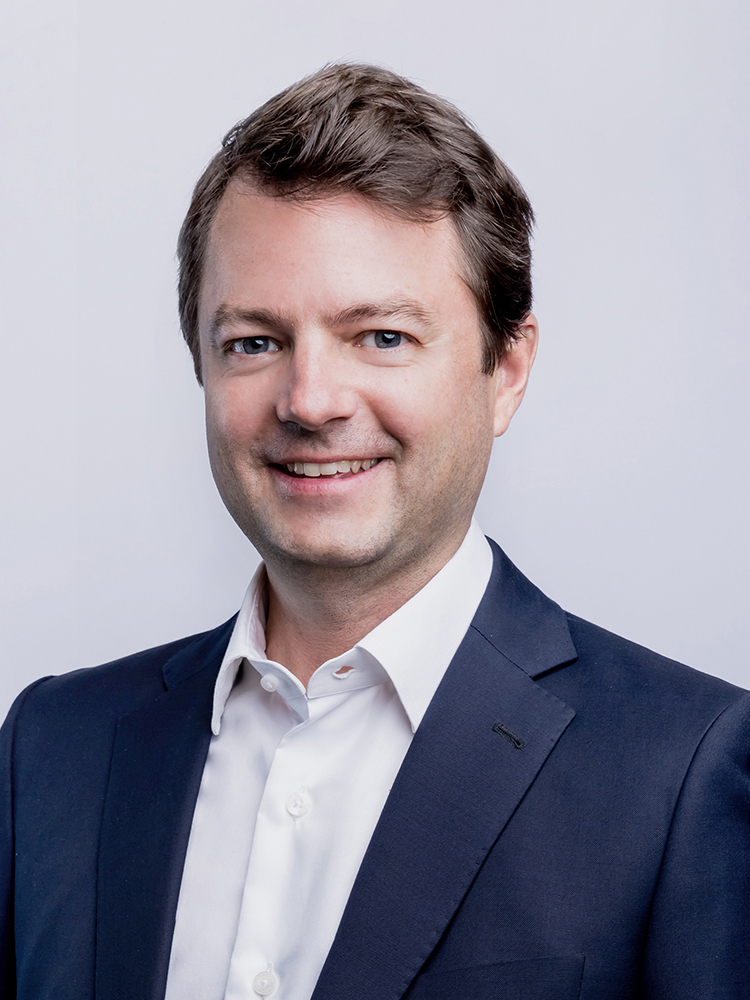
Photo: Alex Tancock, InterContinental Energy CEO
Forecasting ammonia fertilizer markets requires deep familiarity with supply chains, energy dynamics and the shifting fundamentals that underpin global trade. Our team analyses every factor influencing ammonia prices — from feedstock costs and production changes to regional demand trends.
Our long-established forecasting approach is built on trusted data, extensive market relationships, and clear interpretation, enabling subscribers to cut through complexity with confidence.
As an ammonia specialist with over a decade of experience, I am proud to provide a service that uses forward-looking insight that is relied upon by major producers, importers, traders and financial institutions worldwide.

Richard Ewing
Head of Ammonia / Deputy Editor at Profercy Nitrogen
Provides you with our daily news and analysis, detailed weekly reports and price quotes
Sign Up Today