Yara's Q2 net income up by almost a third, hails Gulf Coast Ammonia acquisition a "milestone"
July 17th, 2026 by Richard Ewing / Head of Ammonia / Deputy Editor at Profercy Nitrogen


July 17th, 2026 by Richard Ewing / Head of Ammonia / Deputy Editor at Profercy Nitrogen
Norwegian fertilizer giant Yara saw its Q2 net income jump by almost a third year-on-year to $545 million despite market disruption from the war in the Middle East, but the firm cautioned volatile nitrogen fertilizer prices and higher gas costs had delayed off season demand.
The Oslo-headquartered company also hailed the recently announced acquisition of the Gulf Coast Ammonia (GCA) plant in Texas for $1.3 billon as “a significant strategic milestone in the aim to lower production cost and diversify away from European energy prices”.
Yara said with most markets not facing an “immediate need for product, price volatility and market uncertainty have led to a slow start to the new season in the Northern Hemisphere”.
“While part of the volume reduction might reflect a demand loss for the season which has now ended, it is reasonable to assume that a significant part of the Q2 volume reduction reflects delayed demand,” it explained.
“While farmers in some cases can reduce nitrogen consumption by optimising application rates, nitrogen demand is typically more inelastic than other nutrients, reflecting the significant yield impact of any material reduction of nitrogen.”
The Scandinavian group said as of mid-July, buying activity “appears to have resurfaced in core markets and the re-escalation of the conflict in the Middle East raised additional concern over supply for next season”.
“While nitrogen markets continue to face uncertainty, India and China remain key drivers of the global balance with Indian imports ahead of last year and expectations of increased Chinese exports in second half of the year,” the producer continued.
“Yara continues to leverage its global downstream presence to optimise volumes across markets and support stable production levels throughout its system.”
Based on forward markets for natural gas on 7 July and assuming stable gas purchase volumes, Yara’s gas cost for Q3 and Q4 is seen $75 million and $115 million higher than a year ago at $625 million and $685 million, respectively.
Such estimates may change depending on future spot gas prices and local terms, the group added.
Revenue up y-on-y despite falls in key outputs
Yara’s Q2 revenue and other income was up 12% year-on-year at $4.43 billion despite year-on-year falls in ammonia output to 1.61m. tonnes from 1.75m. tonnes, with finished fertilizer and industrial products, excluding bulk blends, down at 4.63m. tonnes from 4.86m. tonnes.
Urea production fell to just over 1m. tonnes in the April-June period from 1.17m. tonnes in the year-ago quarter, while nitrates output was down 73,000t year-on-year at 1.4m. tonnes, Yara disclosed.
“Production outputs for finished products were 5% below the same quarter last year due to both planned maintenance and unplanned outages,” it added.
“Total deliveries were 17% lower than in the same quarter a year ago following a strong first quarter, and as rapidly declining fertilizer prices deferred buying patterns in off-season markets.”
Earlier this month, Yara said the purchase of the 1.3m. tonne/year GCA project at Texas City will allow the firm to utilise its midstream ammonia platform to supply both external customers and its own internal sourcing needs.
“The plant is currently in commissioning and is anticipated to continue ramping up toward full production and stable operations by end of 2026, with production targeted at above nameplate capacity,” it said on 2 July.
In a presentation released today, Yara disclosed that its energy exposure on ammonia production post-GCA acquisition will be 38% Henry Hub, meaning “European gas will no longer be Yara’s primary energy exposure”.
“Portfolio optimisation opportunities can further increase the relative share of Henry Hub exposure,” it noted.
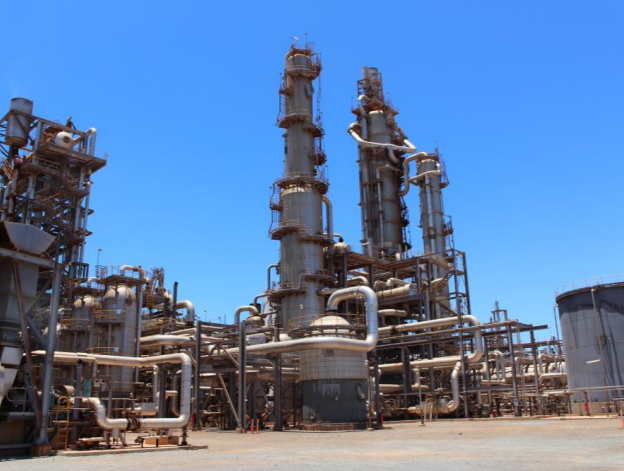
Yara has agreed to pay $1.3 billion for the GCA plant in Texas. Photo courtesy of Yara.
Forecasting ammonia fertilizer markets requires deep familiarity with supply chains, energy dynamics and the shifting fundamentals that underpin global trade. Our team analyses every factor influencing ammonia prices — from feedstock costs and production changes to regional demand trends.
Our long-established forecasting approach is built on trusted data, extensive market relationships, and clear interpretation, enabling subscribers to cut through complexity with confidence.
As an ammonia specialist with over a decade of experience, I am proud to provide a service that uses forward-looking insight that is relied upon by major producers, importers, traders and financial institutions worldwide.

Richard Ewing
Head of Ammonia / Deputy Editor at Profercy Nitrogen
Provides you with our daily news and analysis, detailed weekly reports and price quotes
Sign Up Today